Narrative structure
The world is full of stories, some true and some myths and
legends; however these are what shape the way media is portrayed. The stories
that are in media are called the narrative structure. The narrative structure
of a film gives the viewer certain expectations for the film. Most of the media
we consume are from texts that tell a story. One example of this is a
documentary. Documentaries are based on the ‘real life stories’ of everyday
people. These can also influence the opinion of the audience as they show more
of a realistic view to, for example, a comedy. In terms of film we expect
different things based on the narrative structure and the genre of the film.
However there are some general expectations across the field for all movies;
11)
The opening of the movie should give the
audience the key facts about who is in the film, what the film is about and
where it is set.
22)
The characters should interact with each other
33)
We expect to see a series of incidents which are
connected to each other.
44)
A big part of most films are the problems and/or
conflict
55) Resolution
Some films contain clues which give the audience a slight
insight into the ending of the film. This is done to help the audience to think
about what they have witnessed throughout the film and recall events leading up
to that particular point.
Classical Hollywood narrative
Classical Hollywood narrative is a term developed by Tzvetan
Todorov who states that stories begin with an equilibrium, which is normality
and everything is how it should be, next an event happens which disrupts the
equilibrium causing a series of events. This is when the ‘hero’ tries to
resolve the problem that has occurred. Once the problem has been resolved there
is a new equilibrium, which is not the same as before but the new version of
‘normal’. I think that looking at this theory in relation to different films
allows an audience to follow a series of events and to understand the affect
that the events have had on the characters. The film Halloween however does not follow the
classical Hollywood narrative as there is an event right at the beginning of
the film where Michael Myers kills his older sister and throughout the film
this theory is not present as we do not know what the normal equilibrium was
before Michael killed his sister and the film ends on a cliff hanger where the
‘evil’ character was thought to have been killed however we can hear his
breathing in the background of the last shot.

Character types
The theory that there are certain characters present with in
the films was developed by Vladimir Propp who studied 100s of examples of folk
tales and analysed them to find any structures that they shared. From his
research he found that there were 31 narrative functions and that there were 8
main character types which he later published in his book ‘Morphology of the
folk tale’ (1928). The 8 character types that he found were:
·
The villain
·
The hero
·
The donor
·
The helper
·
The princess
·
Her father
·
The dispatcher
·
The false hero
When applying this to different films I think that this
theory is helpful as it identifies key characters that may be in the film and
what their roles are within the narrative text are. Some of the eight
characters that Propp identified are present within the film Halloween. There
is the Villain (Michael Myers) the hero or in this case the heroine (Laurie),
the helper/ the hero (Dr Loomis).

Binary opposition
This theory of Binary opposition was developed by Claude
Levi-Strauss who found that there are sets of opposite values which is
incorporated in the structure of media texts. The most known example of Binary
opposition is Good and Evil which are two sets of opposite values, including
morals and behaviours. These can be easily identifiable within a film. This
theory I fell allows the audience to understand that there has to be polar
opposites with the structure of the film in order for the film to have a strong
story line and so that the structure of the film can be based around the battle
of opposite domination. In the film Halloween there are examples of binary
opposition.
11)
Good vs Evil
22)
Girl vs boy
33)
Strong vs weak
44)
Normal vs strange
55)
Empowered vs victim

Bordwell and Thompson
Theorists Bordwell and Thompson whilst not creating a full
theory behind narrative stumbled across ideas which are relevant to narrative
structure. These are evident in their book ‘Film art: An introduction’ where
they state an interesting definition of narrative. They defined narrative as ‘A
chain of events in a cause-effect relationship, occurring in time and space’.
They found that for them the narrative starts with one particular situation
which is followed by a series of changes according to a pattern of cause and
effect, finishing off with a new situation which brings to an end the old
situation before it. They also stated that ‘narrative shapes material in terms
of time and space. What is meant by this is that time and space determine where
things take place, when they take place and how quickly the events take place
and that narrative manipulates the audience’s awareness of time and place by
using techniques such as flashbacks, replays of action and speeding up or
slowing down time.
In the film Halloween there are many events that cause other
events to happen. Two examples of this is at the beginning of the film where he
kills his older sister on Halloween night. This is the trigger that starts up a
series of events such as him going to the psychiatric hospital. The second
event that triggered other events is when he escaped from the hospital and
drove away in the car. This started another series of events.
Also in the film we there are two events that we know happen
but we don’t see. The first one is when Michael was younger and he went into the
psychiatric hospital and we do not see within the film what happens to him
while he is in there. Another event we don’t see but we know it happened is him killing a man just after he escaped and
stealing his boiler suit which he wears throughout the rest of the film.

Section 2- Halloween
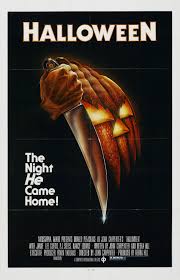
11)
How does the start of the film exemplify a
common technical code convention of the horror genre?
At the very start of the film there is a
killing with a very short build up. So from the start of the film we know what
the genre is and what the main theme of the film is about. Also in the film
Michael stalks Laurie for quite a while appearing and disappearing while she at
school and at home. This is quite common for a horror film as it shows the
build-up for the attack that we know is going to happen at some point within
the film.

22)
How does the setting fit with the horror genre?
The setting is in a rural town, which is
quite typical of a horror film to be set somewhere quiet and where people can
easily be isolated. At the start of the film the main characters were in the
house for the first scene but as soon as Michael escaped from the hospital the
setting opened up into a rural town. The fact that the setting is rural means
that there are less people around so the killer is less likely to be caught.

33)
What iconography of “innocence” do we hear or
see early on?
Early on within the film we notice that the
first victim is a venerable, young, attractive female who was killed. The
following victims were also all ‘innocent’ in terms of that the killer had no
prior connection to any victims apart from his first which was his sister. The second killing of the man whose clothes
he stole was purely an opportunist killing where the victim happened to be in
the wrong place at the wrong time.

44)
What was the main industry impact of Halloween?
Though the genre of slasher had been around
years before the film’s release, Halloween sold the slasher genre to the world,
which counters some of the codes and conventions of the earlier horror films.
Many believe that the birth of this genre was the film ‘Psycho’ with the
classic and very famous shower scene. This particular genre also was a lot more
graphic than other films from other horror sub-genres, for example we get to
see the most of the killings that Michael commits and not silhouettes on the
wall or just sound effects. The film paved the way for other graphic and disturbing
films that followed.

55)
Name some slasher movies which followed on from
Halloween
After the movies released Halloween and the
concept within the film started a whole line of films who follow suit, for
example Friday the 13th filmed in 1980 a mere two years after
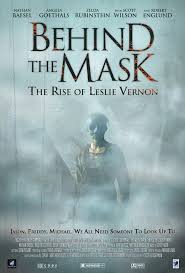
Halloween came out following on with the terrifying genre. Other famous films
include nightmare on Elm Street (1984) and a newer slasher film called behind
the mask.
66)
What are the four plot rules of the slasher film
sub-genre which Halloween began?
·
A traumatic event in the past creates a
psychotic killer
·
The killer returns to the site of the event,
usually on a specific date in the present that allows the makers to use a
calendar motif in the title.
·
The killer stalks and graphically kills a group
of obnoxious and stupid teens of both sexes, usually with some sort of blade,
often a garden or farm implement.
·
A ‘final girl’ survives, usually boyish and
often virginal, or thwarts the killer, although he is never entirely
vanquished.
77)
What does the extract mean by “a reactionary
sexual agenda”?
This means that the characters in the film
that had sex ended up dead. Critics of the film say that this is a ‘punishment’
and ‘consequence’ for the ‘out of control’ teens. The critics felt that the
film implied that the director felt that teens were have too much sex and that
there was too much ‘free love’ from the 60s. The final girl Laurie was an
intended target and as she paid attention to her surroundings and what we’re
happening she survived, however the critics noticed that Laurie happened to be
more ‘boyish’ then the other girls and that she was still a virgin which some
may say that these factors support the critic’s view of the film.
88)
How does the director, John Carpenter, counter
the suggestion that Halloween had a reactionary sexual agenda?
Unsurprisingly John Carpenter did not agree
with the films critics and in fact the reason the teens were killed was because
‘they were not paying attention’ and that they were ‘distracted’. The reason
that Laurie survived was because she paid attention and was distracted by other
things within the film, making her a harder target for Michael to kill.
Throughout the film the signs were all there that he in act intended to kill
her (for example stalking her at home and school), however this never happened.
99)
Why did Michael kill his sister?
Critics say that Michael killed his sister as
he saw her having sex with her boyfriend and replicates the action with a
knife. However this is not what the director intended, the reason that Michael
killed his sister was because he was evil. This is represented in the film
where Dr. Loomis refers to Michael as ‘it’ showing that Michael doesn’t process
human qualities and could mean he is a satanic or supernatural being.
<iframe width="640" height="390" src="//www.youtube.com/embed/ELF1DCf1ChA" frameborder="0" allowfullscreen></iframe>


Section 3- The Crazies
11)
Does the crazies follow CHN and why or why not?
The film does not follow that Classical
Hollywood narrative as at the very start of the film we are shown the town on
fire, showing disequilibrium before we see the equilibrium that we are used to
seeing at the start. The structure of this film is disequilibrium, equilibrium,
disequilibrium, new equilibrium.
22)
How many of Props character types can be
identified in the film?
In the film I was able to identify four out
of the eight characters that Propp identified in his research. These were the
hero (David), the helper (Russell) , the princess (Judy) and the villain (the
government).
33)
List five examples of binary opposition in the
film and explain them
Government vs people
Zombie’s vs humans
Good vs evil
Normal vs the unknown
Science vs nature
44)
Identify three durations and give an estimate of
the time each duration covers
The screen duration of the film was 92
minutes, the plot duration was 4 days and the story duration was also a matter
of days.
55)
Give two examples from the 92 minute film that
happen in a different time and space
The fire scene right at the beginning of
the film. This is a flash forward into the insight of the future of the town
within the film. This also plays on the audiences mind as they want to know how
and why the town ended up alight.
The second event was when Judy and David
were arguing about Judy going to her mothers. When Judy notices something
outside she sends David out to check and they are both taken to the school and
‘checked’ for the disease. When David goes back to the police station to get a
gun after escaping from the ‘disease free’ peoples line he finds Russell is
already there. What we don’t see is Russell attempt to leave the town by
packing a truck and driving down the highway only for his tyres to get spiked
and for him to get sent back. This is referred to later in the film when they
find his truck on the road and he runs straight to it.
66)
List two events from the 92 minute film that
cause later events in the film but happen before the film starts.
The plane crash that releases the toxins into
the drinking water of the towns’ people, this is essentially the start of the
epidemic and the cause of all the events within the film. We know this when the
man who runs out onto the baseball pitch was the owner of the first house
connected to the water supply.
The second event that causes later events in the
film was the isolation of the remaining people. When the government starts to
get involved and starts to quarantine the town off it triggers the hero David
to rescue his pregnant wife and to find their way out of the town. This is what
starts the main character quest to try and escape the town alive.


No comments:
Post a Comment